
In this post, I will show you how to completely remove Microsoft 365 Apps from Windows 10 and Windows 11 devices. If you are troubleshooting issues such as repeated activation prompts, corrupted Office installations, Office apps crashing or behaving inconsistently, or problems after failed upgrades or side-by-side installs. Then performing a clean uninstall followed by a fresh installation is often the most reliable way to reset Microsoft 365 Apps on a device.
Simply uninstalling from Settings or Control Panel can leave behind services, scheduled tasks, registry entries, and other remnants. Microsoft now recommends using Enterprise version of Microsoft Support and Recovery Assistant (SaRAcmd) for scripted or large-scale cleanups. Microsoft 365 uninstall troubleshooter in the Get Help app for individual devices. You must have local administrator rights on the Windows device to perform a full removal.
Contents
Supported Methods and Office Versions
At a high level, you have two primary supported options for completely removing Microsoft 365 apps from Windows 10 and Windows 11 devices.
| Methods | Supported Office versions | Typical use case |
|---|---|---|
| Microsoft 365 uninstall troubleshooter (Get Help) | Microsoft 365, Office 2024*, Office 2021, Office 2019, Office 2016 (*the troubleshooter currently cannot uninstall Office 2024; see note below.) | Interactive removal on a single PC |
| SaRA Enterprise (OfficeScrubScenario) | Any Office version, including Microsoft 365, 2024, 2021, 2019, 2016, 2013, 2010, 2007 | Scripted or large-scale clean uninstall for IT admins |
Microsoft 365 uninstall troubleshooter can be launched from “Uninstall Microsoft 365 or Office from a PC” article and runs inside the Get Help app. It currently cannot uninstall Office 2024, so for that scenario you should use Control Panel or the SaRA Enterprise Office Uninstall scenario instead.
Note
Method 1: Completely Remove Microsoft 365 Apps using Get Help
For a single device (your own PC or an end user’s PC), Microsoft’s preferred method is to use the uninstall troubleshooter that runs inside the Get Help app on Windows. This tool can perform below tasks:
- Detects your Microsoft 365 / Office installation type (Click-to-Run, MSI, or Microsoft Store).
- Attempts to remove Microsoft 365 Apps or Office 2021/2019/2016.
- Cleans up most remaining components so you can reinstall cleanly.
Option A: Start Uninstall Troubleshooter directly from Get-Help App
- On the affected PC, open Start and search for Get Help, and click on it to launch.
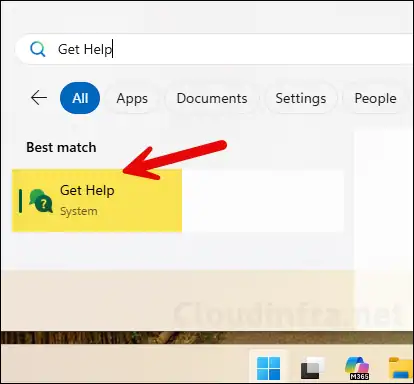
- In the text box, type Uninstall Microsoft Office or Uninstall Microsoft 365. Select Yes for Do we have your consent to run this troubleshooter?. It will automatically start the process for uninstalling Microsoft 365 apps or Office apps.
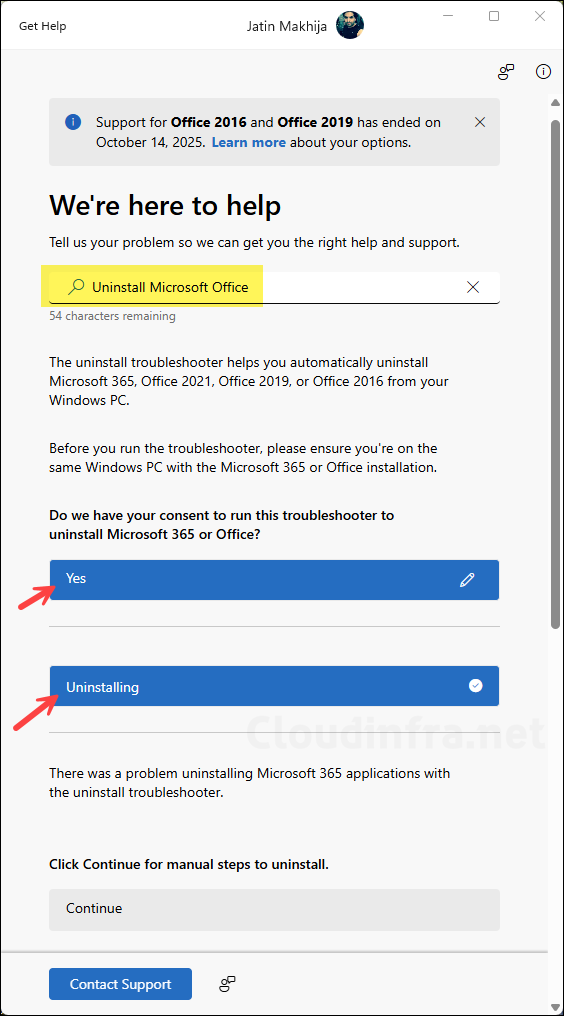
Option B: Start Uninstall Troubleshooter directly from Microsoft WebPage
You can also run the Get Help troubleshooter directly from the Microsoft Support website by visiting the page Running troubleshooters in Get Help. Once on the website, depending on your troubleshooting scenario, you can select any of the troubleshooters listed under the Available troubleshooters section. For our scenario, we will click on Microsoft 365 troubleshooters.
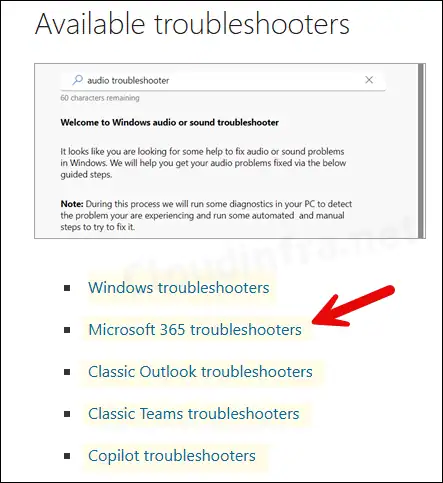
You will find various options in a collapsible menu under the heading Available Microsoft 365 troubleshooters. Expand Microsoft 365 uninstall troubleshooter section, then click Start. This will open the Get Help app on your device with a pre-populated search query, Uninstall Microsoft Office similar to the one we saw in Option A. Click on Yes and proceed with the removal of Microsoft 365 Office apps.
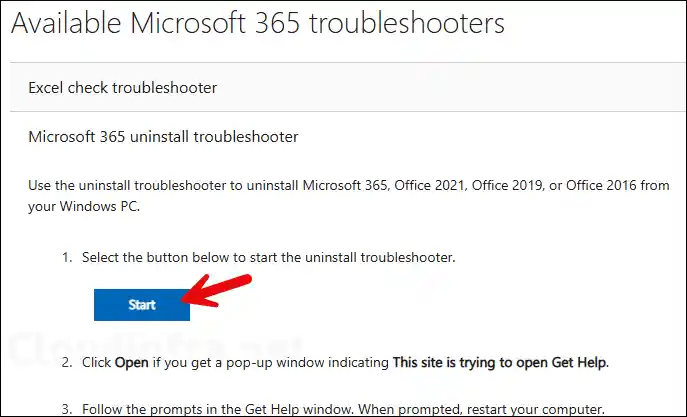
Option C: Directly Launching Uninstall Troubleshooter
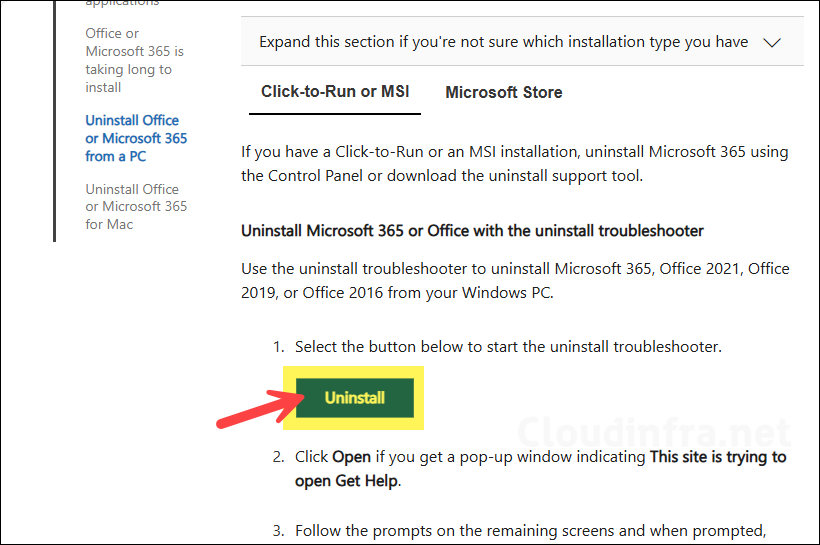
You can open uninstall troubleshooter directly from another Microsoft webpage: Uninstall Microsoft 365 or Office from a PC – Microsoft Support. All of these options lead to opening the Get-Help app with pre-populated search query “Uninstall Microsoft Office” to remove Microsoft 365 office apps.
Method 2: Completely Remove Microsoft 365 Apps with SaRA Enterprise (Command-line)
Previously, IT administrators could use the GUI version of the Microsoft Support and Recovery Assistant (SARA) to fix many Office-related issues, including completely removing Microsoft 365 Apps from a device. However, Microsoft has discontinued the standalone SARA tool and integrated its functionality into the built-in Windows app called Get Help.
Microsoft Support and Recovery Assistant (SARA) is still available as an Enterprise version, which works only through the command line. The enterprise version of the Microsoft Support and Recovery Assistant is a self-contained, enterprise-ready diagnostic tool that can be used to troubleshoot specific issues related to Microsoft 365 Apps, Microsoft Office, Teams, and other Microsoft services. The enterprise version of SaRA is regularly updated by Microsoft; always download and use the latest version of this tool from official Microsoft website.
For IT administrators who need a repeatable, automated, and fully supported method, Microsoft provides the Enterprise version of Microsoft Support and Recovery Assistant, often referred to as SaRAcmd. It removes any version of Office from a device. It is fully scriptable and runs in an elevated command prompt with no user interaction. Furthermore, it can also troubleshoot issues like resetting Office activation, fixing Teams meeting add-in problems, and more. Covering all these troubleshooting scenarios is beyond the scope of this post. For more information, refer to this link: Supported scenarios.
Download SaRA Enterprise
- On the problematic PC, open the link Microsoft Support and Recovery Assistant Enterprise version – Microsoft 365 | Microsoft Learn and click on the Download the Assistant button to download SaRa Enterprise.
- It will download a Zip file. Extract its contents into a folder.
Uninstall Microsoft 365 Apps / Microsoft Office
- Open Command Prompt as administrator and navigate to the folder where you have extracted SaRAcmd.exe.
- Use one of the sample commands provided by Microsoft for the OfficeScrubScenario.
Uninstall all Office versions from the device
.\SaRAcmd.exe -S OfficeScrubScenario -AcceptEula -OfficeVersion AllUninstall a Microsoft 365 Apps / subscription version
.\SaRAcmd.exe -S OfficeScrubScenario -AcceptEula -OfficeVersion M365Uninstall a specific perpetual version (Office 2016)
.\SaRAcmd.exe -S OfficeScrubScenario -AcceptEula -OfficeVersion 2016Uninstall a specific perpetual version (Office 2019)
.\SaRAcmd.exe -S OfficeScrubScenario -AcceptEula -OfficeVersion 2019Allowed values for -OfficeVersion are All, M365, 2021, 2019, 2016, 2013, 2010, and 2007.
- Wait for the scenario to finish. SaRAcmd reports a result code in the console, for example:
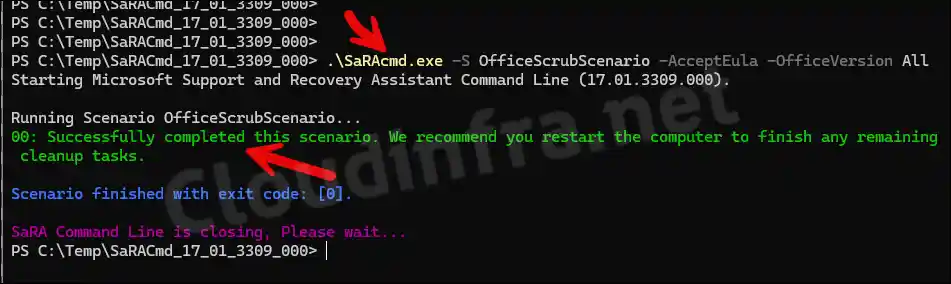
- 00: Successfully completed this scenario. means Office was removed.
- 06: Office programs are running means you must close all Office apps and rerun the scenario.
- 10: SaRA needs to run elevated means the Command Prompt was not started as administrator.
- Restart the computer after a successful uninstall so any remaining clean-up tasks can complete.
- Log files and detailed diagnostics are written under the user’s local profile (for example, under %localappdata%\SaRALogs), which is helpful for audit and troubleshooting.
SaRACmd.exe -S ExpertExperienceAdminTask -AcceptEula
SaRACmd.exe -S OfficeScrubScenario -AcceptEula
SaRACmd.exe -S TeamsAddinScenario -AcceptEula -CloseOutlook
SaRACmd.exe -S TeamsPresenceScenario -AcceptEula -CloseOutlook
SaRACmd.exe -S OfficeSharedComputerScenario -AcceptEula -CloseOffice
SaRACmd.exe -S OutlookCalendarCheckTask -AcceptEula
SaRACmd.exe -S OfficeActivationScenario -AcceptEula -CloseOffice
SaRACmd.exe -S ResetOfficeActivation -AcceptEula -CloseOffice
SaRACmd.exe -S OfficeRoiScanNormalScenario -AcceptEula
SaRACmd.exe -S OfficeRoiScanFullScenario -AcceptEula
SaRACmd.exe -S OfficeSignInScenario -AcceptEula
SaRACmd.exe -S OutlookConnectivityScenario -AcceptEula
SaRACmd.exe -S OutlookAuthCheckScenario -AcceptEula
SaRACmd.exe -S OfficeSetupScenario -AcceptEula -Language English -Platform 64
SaRACmd.exe -S OutlookEmailSetupScenario -AcceptEula
SaRACmd.exe -S OutlookHangCrashScenario -AcceptEula****** Example commands that can be run with SaRAcmd.exe tool ******
- Below screenshot shows the command in action, removing all versions of Microsoft Office from a computer.
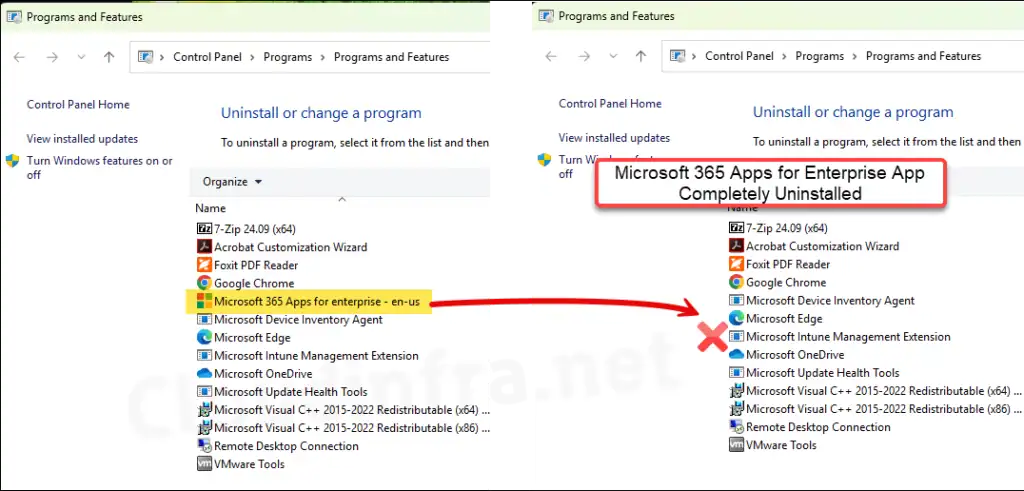
- You can go to Programs and Features in the Control Panel to check and confirm whether the respective Office apps have been removed or uninstalled from the computer. Whether all versions of Office are uninstalled or only specific ones depends on the command-line switches provided with the
.\SaRACmd.execommand.
Now that I’ve demonstrated the use of the SaRAcmd.exe command to completely uninstall Microsoft Office applications, it’s important to note that we executed the .\SaRAcmd.exe command locally on a single computer. Manually launching PowerShell on each computer and running the command is not feasible for larger environments. If you want to remove Microsoft Office apps from multiple computers in bulk, you can automate the process using a PowerShell script.
Microsoft has provided two sample starter scripts for this task: an interactive script and a non-interactive script. If you want to fully automate the removal process, use the non-interactive approach. You can download the scripts from here: Sample 1 and Sample 2. You can use a combined approach using Sample 3 script.
You will need to update $SaraScenarioArgument variable in the script to include all the switches you would normally use with the SaRAcmd.exe command. For example, to remove only the Microsoft 365 Apps for enterprise from computers using this script, set $SaraScenarioArgument to: “-S OfficeScrubScenario -AcceptEula -OfficeVersion M365”.
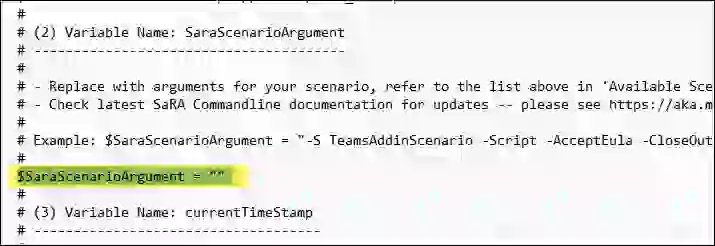
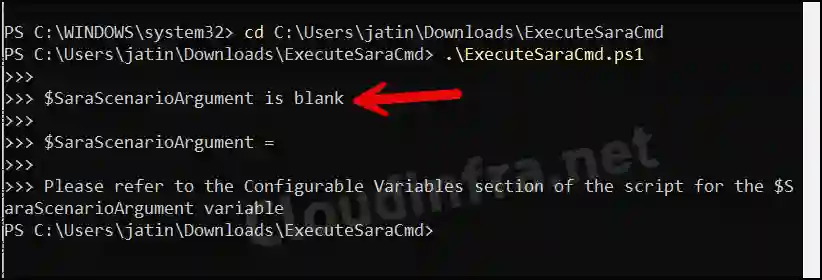
If you do not set this variable and execute the script, you will receive an error message stating that $SaraScenarioArgument is blank. I recommend testing the script on a single device first. If it works as expected, extend the testing to a few more devices before rolling it out to all business users.
You can use any method to deploy the PowerShell script, for example, Group Policy, Microsoft Intune, or any other deployment tool. Be sure to monitor its progress to verify that the application has been successfully removed. Once the app is completely removed, you can reinstall it by downloading it from the Office portal (refer to the later sections of this post). Finally, check and confirm whether the issue related to the Office installation has been resolved.
PS C:\Users\jatin\Downloads\ExecuteSaraCmd> .\ExecuteSaraCmd.ps1
>>>
>>> $SaraScenarioArgument is blank
>>>
>>> $SaraScenarioArgument =
>>>
>>> Please refer to the Configurable Variables section of the script for the $SaraScenarioArgument variable
Method 3: Completely Remove Microsoft 365 Apps Manually
In some environments you may not be able to use Get Help or SaRA Enterprise. For example, offline machines, heavily locked-down desktops, or special kiosk scenarios. In those cases you can still fall back to older methods recommended by Microsoft.
Uninstall via Control Panel or Settings
- Press the Windows key and type Control Panel, then open it.
- Go to Programs > Programs and Features.
- Select your Microsoft 365 / Office suite or standalone app and choose Uninstall.
- Follow the prompts to uninstall the app.
If you have a Microsoft Store installation for Microsoft Office Apps, you can use the below PowerShell command to remove the Store-based Office package.
Get-AppxPackage -name "Microsoft.Office.Desktop" | Remove-AppxPackageManual Cleanup
After you have removed Microsoft 365 apps manually from a computer, you can delete its associated metadata for a clean uninstall. Follow the steps below to perform manual cleanup. This approach is more complex and should be used only when the uninstall troubleshooter or SaRA Enterprise cannot complete the job.
- Stopping Microsoft Office services via services.msc.
- Removing Office folders from Program Files / Program Files (x86) / ProgramData.
- Cleaning office-related registry keys.
Reinstall Microsoft 365 Apps After a Clean Uninstall
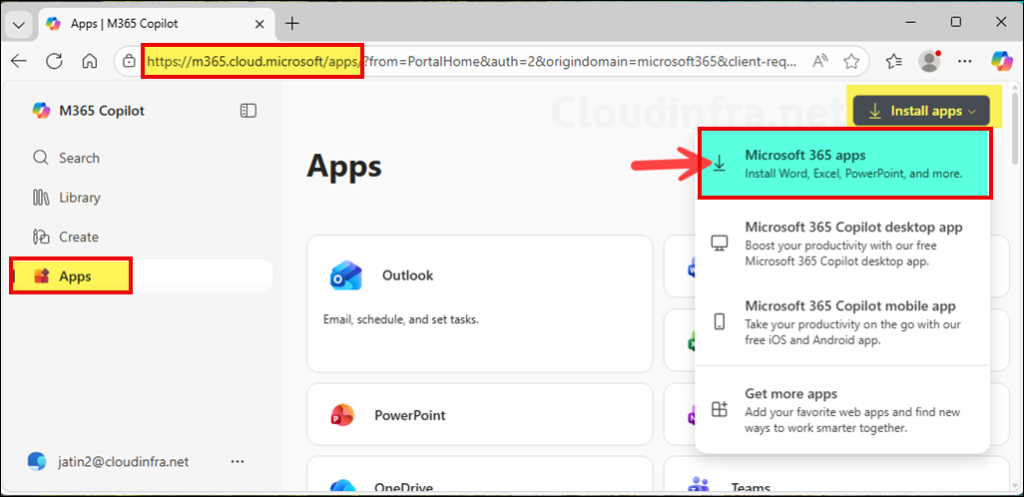
Whichever method you use to perform a clean uninstall, you may want to reinstall Microsoft 365 Apps to confirm that the underlying issue has been resolved. To install Microsoft 365 Apps for enterprise, first download the installer from https://m365.cloud.microsoft/apps and then run the installation on the device.
- Go to the URL https://m365.cloud.microsoft/apps; it should automatically sign in with your credentials (SSO).
- Go to Apps > Click on Install apps and then click on Microsoft 365 apps.
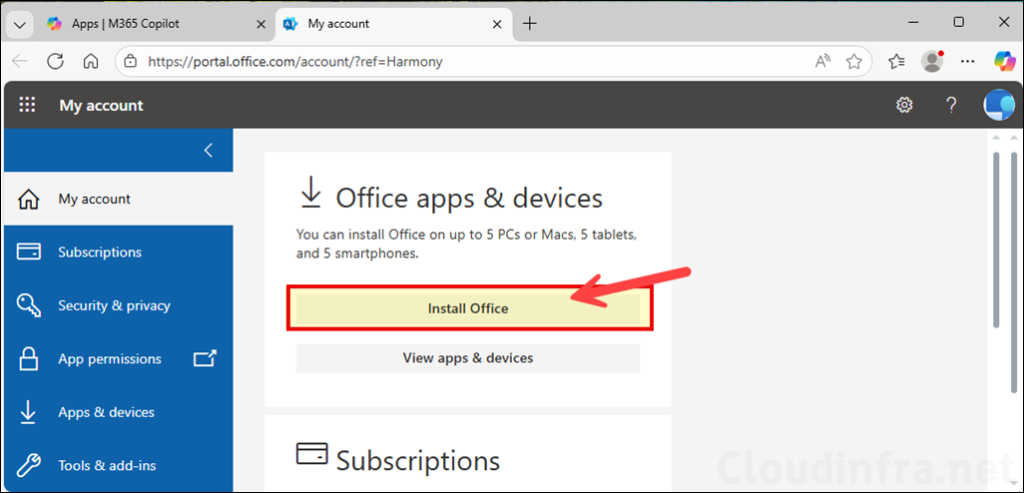
- After you click on Microsoft 365 apps, it will open the https://portal.office.com webpage. Click on the Install Office button to download OfficeSetup.exe file in your downloads folder.
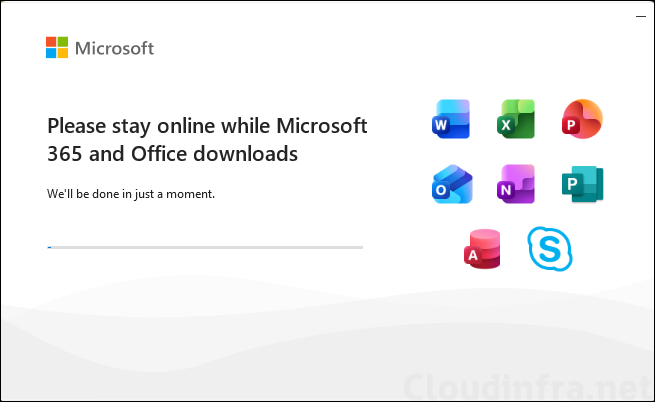
- Double-click the OfficeSetup.exe file to begin the installation process. If you are not an administrator on the device, a UAC prompt may appear requesting an administrator username and password. Once authenticated, the installation of Microsoft 365 Apps will begin.
Tips for Clean Removal of Microsoft 365 Apps
- Get Help uninstall troubleshooter requirements: The troubleshooter only runs on Windows 10 or higher and must be run on the device where Office is installed. It supports Microsoft 365, 2021, 2019, and 2016, but currently cannot uninstall Office 2024.
- SaRA Enterprise must run elevated: Always start Command Prompt as Run as administrator. If you do not, the Office Uninstall scenario exits with error code 10.
- Multiple Office versions installed: If more than one version is detected and you do not specify –OfficeVersion, SaRA will not run and will return an error asking you to specify the version. Use
-OfficeVersion Allif you want to remove everything.
- Verify that Office is gone: After uninstalling,
- Check that Word, Excel, PowerPoint, and Outlook no longer appear in Start.
- Confirm there are no Microsoft 365 / Office entries in Programs and Features.
- If you used the Microsoft Store PowerShell method, run Get-AppxPackage -name “Microsoft.Office.Desktop” to confirm nothing is returned.
Summary
To completely remove Microsoft 365 Apps or Office from Windows 10/11, use the Microsoft 365 uninstall troubleshooter in Get Help for single devices. Use the SaRA Enterprise OfficeScrubScenario for scripted, repeatable, full clean-up across many devices and across all Office versions. Keep Control Panel / Settings and manual removal as fallbacks when the primary methods are not available or fail.
Legacy Way [Deprecated]
Please note that below uninstall process utilizes GUI version of Microsoft Support and Recovery Assistant (SARA) which is not available for download anymore. To use SaRA tool, you will have to use its Enterprise version, which works only with the command line or PowerShell script. Refer to previous sections of this post to know more.
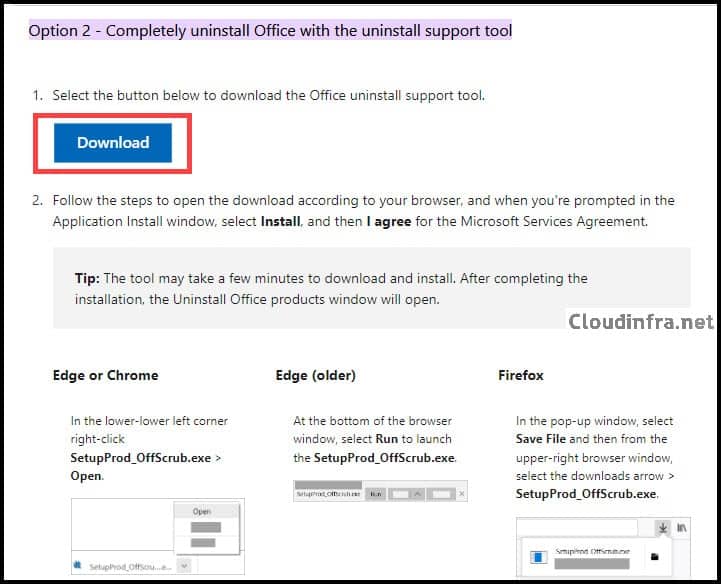
- First, download the Uninstall Support Tool from the Microsoft Support Website. Once you click the Download button, it will download a file called SetupProd_OffScrub.exe.
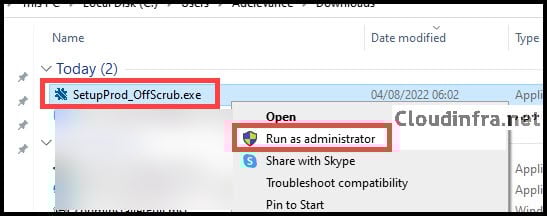
- Right-click on the downloaded file SetupProd_OffScrub.exe and click Run as administrator to run it with administrator rights.
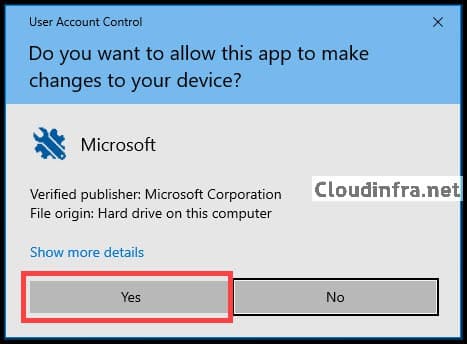
- Click on Yes.
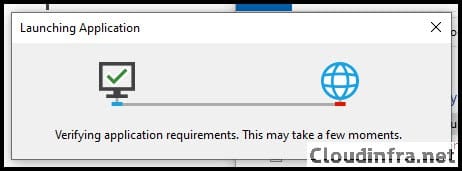
- After you click Yes, the application will launch, and the requirements will be verified.
- On the Application Install window, click on Install to proceed.
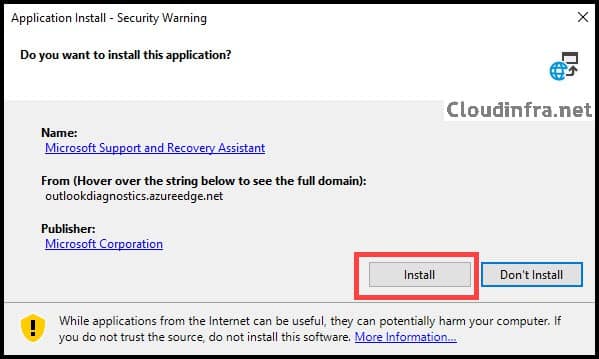
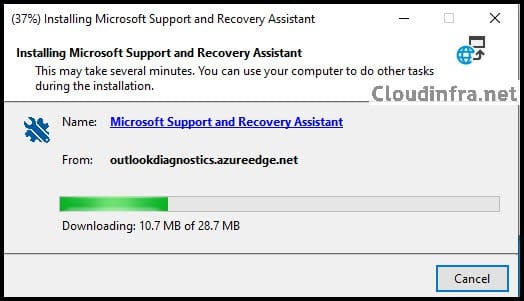
- Installation in Progress…
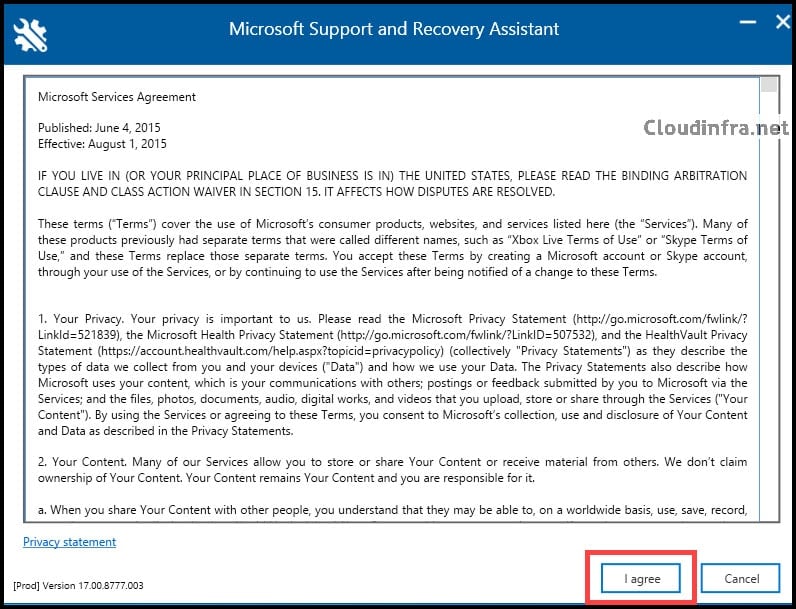
- Click on I agree on Microsoft Services Agreement for Microsoft Support and Recovery Assitant.
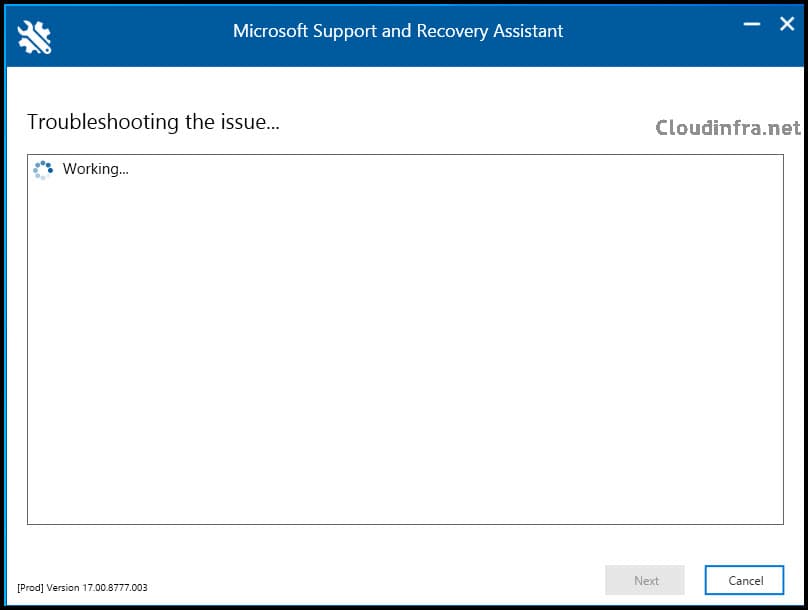
- The next screen will show Troubleshooting the Issue, which will scan your device to find the Microsoft 365 application installed on your device.
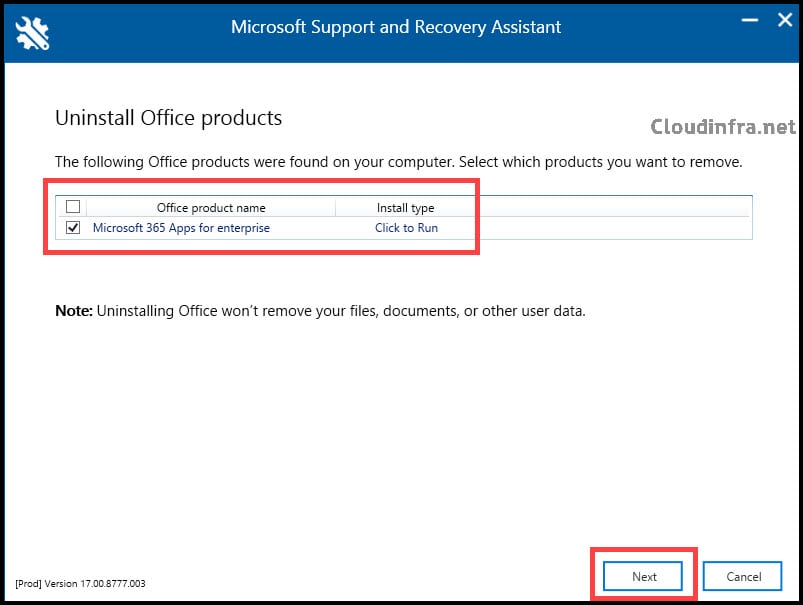
- Once the system scan is complete, the tool will generate a list of all installed Office products, including Microsoft Office or Microsoft 365 Apps for enterprise, if they exist on the system.
- As shown in the screenshot below, the scan on my device identified the presence of the Microsoft 365 Apps for Enterprise. Select this application and click Next to continue the removal process.
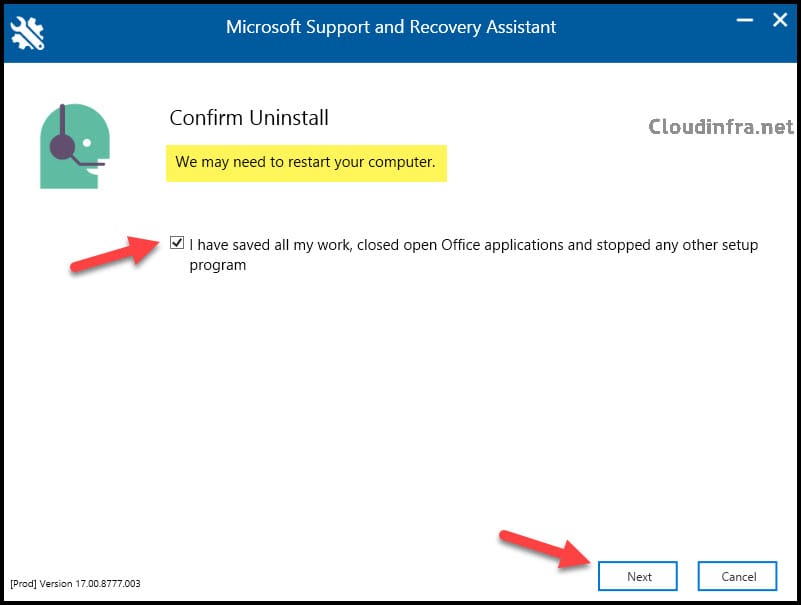
- It’s important to note that a system restart will be necessary to complete the uninstallation process. Be sure to save all your work, close any open Office applications, and stop any other running software or applications.
- Once you are ready, select the checkbox, I have saved all my work, closed open Office applications, and stopped any other setup programs. Then, click Next to proceed.
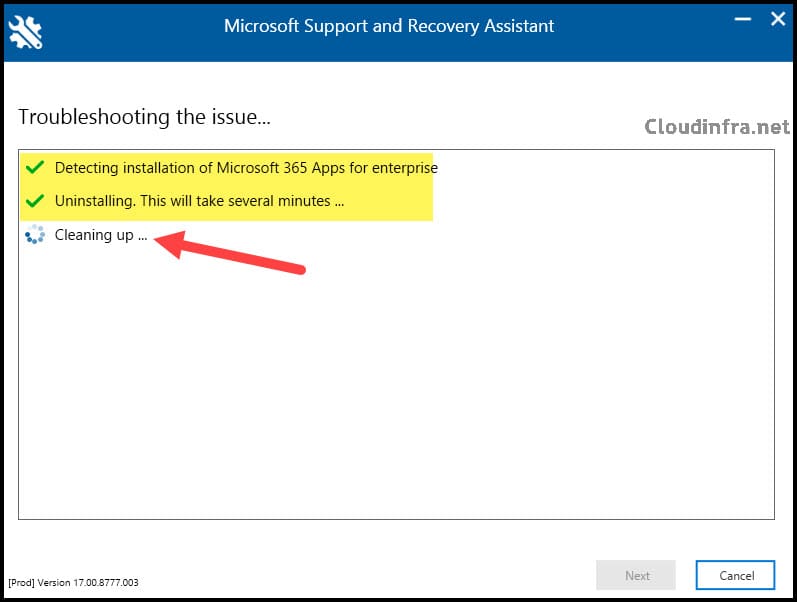
- The uninstall and removal process will begin, cleaning up any associated registry keys and application files from your device.
- Click on Restart to restart your device.
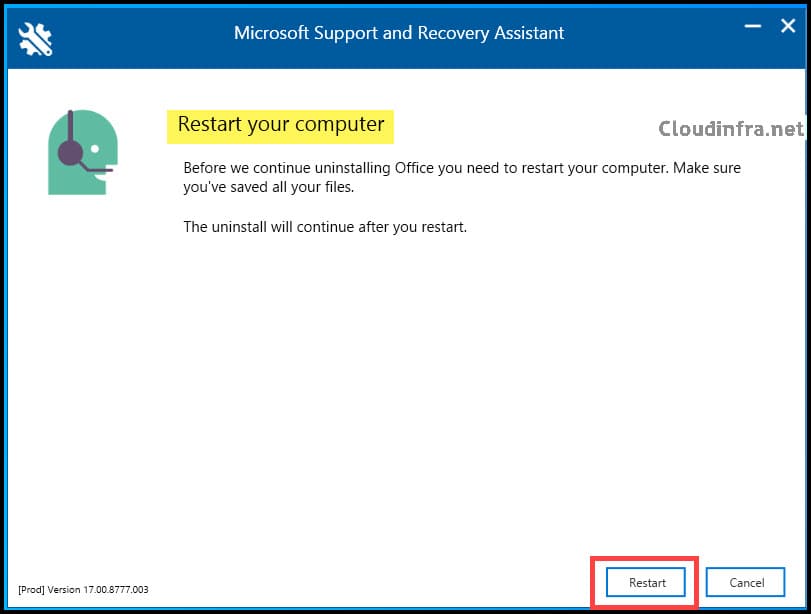
- Restarting the computer…
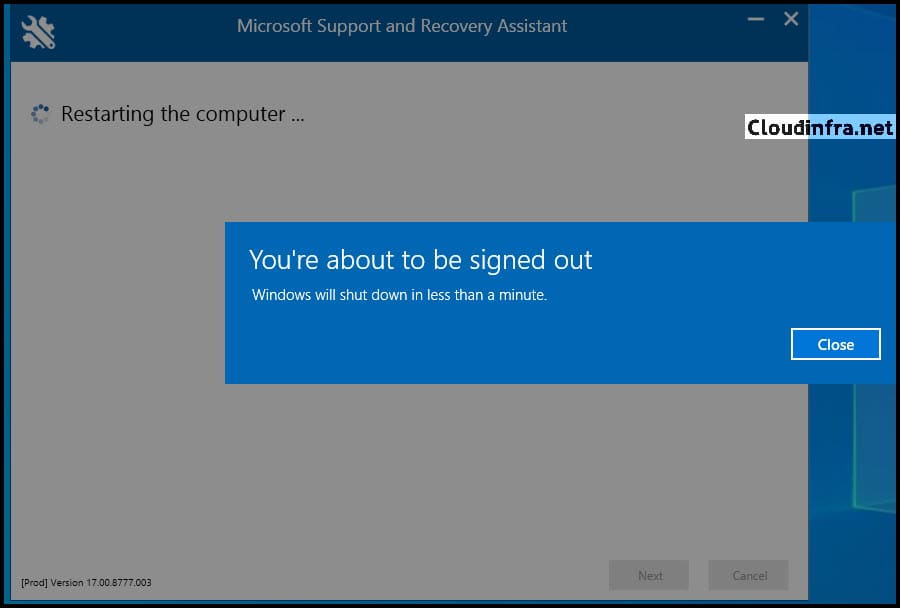
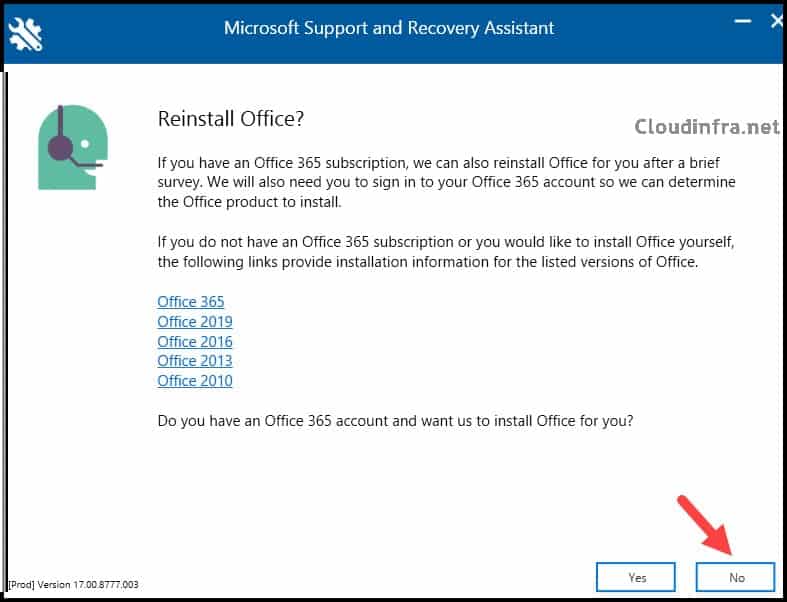
- After restarting, the setup will resume, and the screen will be shown below. Click on No to exit out of the Microsoft Support and Recovery Assistant.
You can also click on Yes, but it will take you through a couple of pop-ups and an authentication process and eventually will show the Office 365 ProPlus screen, which will install Microsoft 365 apps for enterprise.
I will prefer to use https://portal.office.com to download and install Microsoft 365 apps. I have provided the steps for the same in the next section of this blog post.
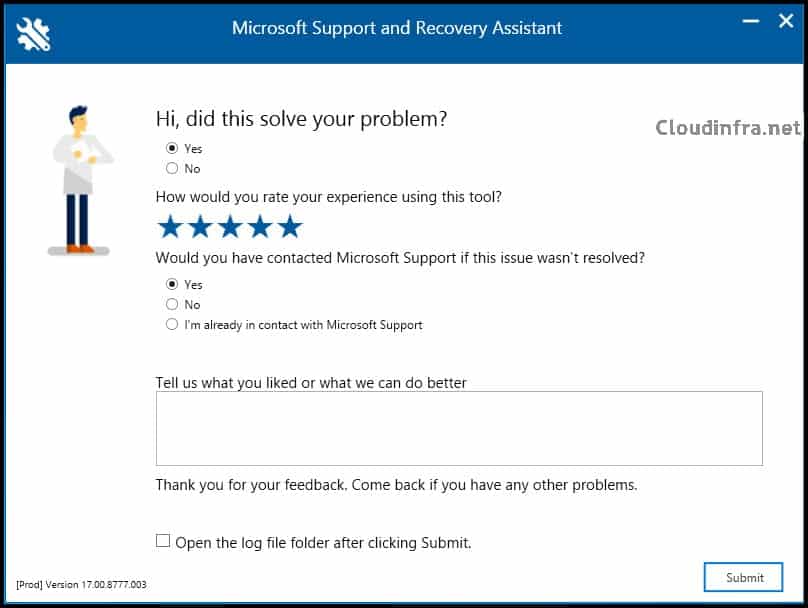
- If you like, you can leave the rating and click on Submit.

Thank you for your clear instructions. I will be doing this later on a clients laptop. I usually use uninstall tool to remove all traces of any program which is very effective, but in Microsoft applications such as office , it may be more prudent to use a Microsoft removal tool as long as it works properly.